Chinese
Steel Coil and Sheet: Processing, Benefits, and Applications in Modern Industry
Steel coil and sheet materials are essential to modern production, yet processing errors, inconsistent specifications, and delayed deliveries can disrupt entire projects. Understanding how these materials are made, processed, and used helps businesses avoid costly setbacks and build a more efficient supply chain.
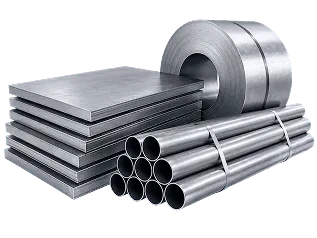
Steel coil and sheet are flat steel materials widely used in construction, automotive production, machinery, and industrial manufacturing. Coils are produced as continuous rolled strips, while sheets are supplied in flat, cut sections. Processing methods such as slitting, leveling, galvanizing, and cut-to-length preparation help transform raw materials into practical products for different industrial applications.
1. What Is Steel Coil and How Is It Manufactured?
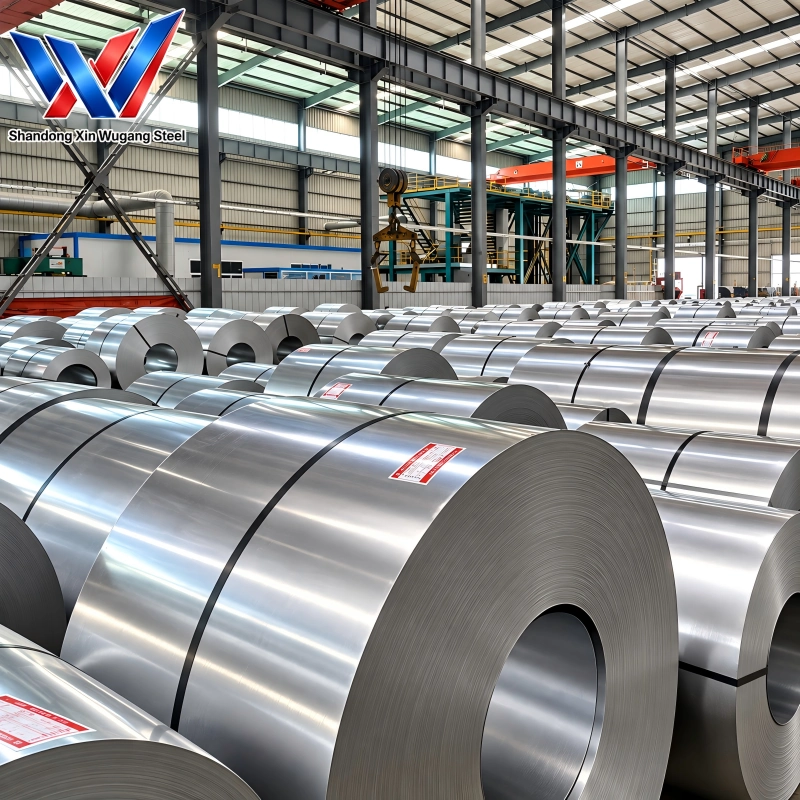
A steel coil is a continuous strip of flat steel wound into a cylindrical roll after passing through a rolling mill. This form makes it easier to transport, store, and process large volumes of material. Manufacturers can unwind the material when needed and convert it into smaller sections for different production tasks.
The manufacturing process begins with a steel slab that passes through a series of rollers. Each roller reduces the material to the required dimensions. Depending on the intended application, the material may undergo additional treatments to improve its surface, strength, or forming properties.
The resulting material can support further processing into various shapes, from flat panels to formed industrial components.
Understanding the Main Production Stages
The basic manufacturing process follows several steps:
- Raw material preparation: Steel slabs are prepared for rolling.
- Heating and rolling: The material passes through rolling equipment to achieve the required dimensions.
- Cooling: The processed strip is cooled under controlled conditions.
- Coiling: The finished strip is wound into a continuous roll.
- Inspection: Surface condition, dimensional accuracy, and other required properties are checked.
- Further processing: The material may undergo cutting, coating, or surface treatment.
The finished coil becomes an important starting material for many downstream manufacturing operations.
2. What Are the Differences Between Hot Rolled Coil and Cold Rolled Steel?
Rolling temperature has a major influence on the final material.
Hot rolled steel is produced at temperatures above its recrystallization temperature, allowing the material to deform more easily during processing. Production temperatures are commonly well above 1000 degrees Fahrenheit.
Because the heated material is relatively malleable, manufacturers can reduce its dimensions efficiently before allowing it to cool.
Hot-rolled materials are commonly used in:
- Construction components
- Industrial equipment
- General-purpose structural parts
- Welded pipe production
- Heavy machinery
- Agricultural equipment
A hot rolled coil may also undergo additional surface preparation. For example, pickled and oiled materials have surface scale removed and receive an oil layer to provide temporary protection during storage and transportation.
Cold rolled steel undergoes additional rolling after the initial hot-working stage, generally at or near room temperature. This process can improve dimensional consistency and surface appearance while increasing strength through work hardening. Annealing may then be applied when greater formability is needed.
Comparison of the Two Manufacturing Processes
| Feature | Hot Rolling | Cold Rolling |
|---|---|---|
| Processing temperature | Above recrystallization temperature | Generally near room temperature |
| Surface appearance | May have mill scale | Generally smoother |
| Dimensional control | Suitable for general applications | Often tighter |
| Typical applications | Construction and heavy equipment | Precision components and appliance panels |
| Additional processing | Pickling, cutting, forming | Annealing, coating, forming |
Both production methods serve important purposes. Their application depends on the properties required by the final component.
3.Steel Coil vs. Steel Sheet: How Are They Different?
Although these materials often originate from similar production processes, their delivery forms are different.
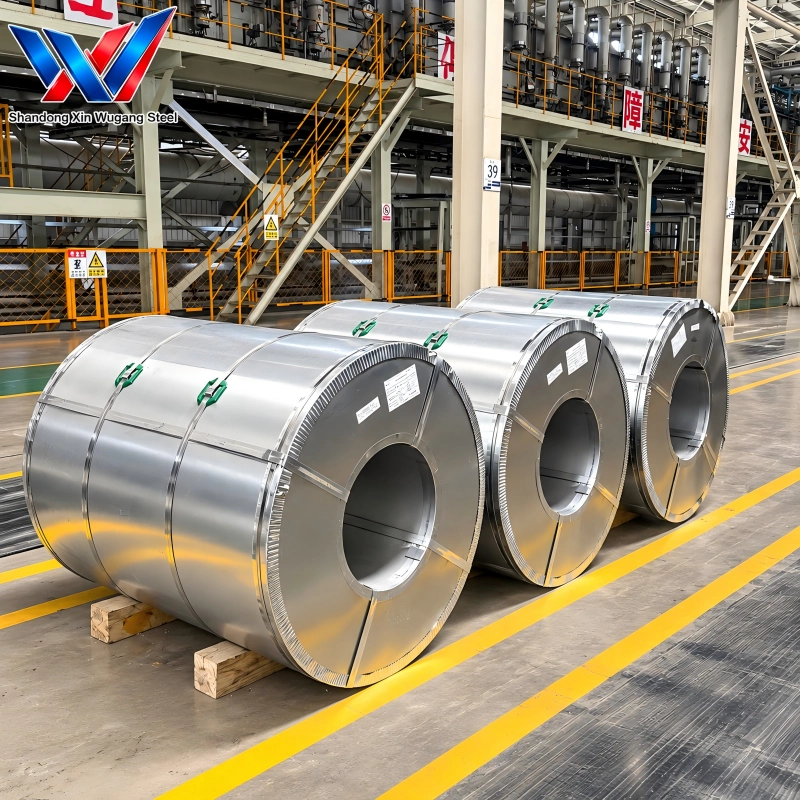
A steel coil arrives as a continuous roll, making it suitable for manufacturing operations that require repeated cutting or continuous feeding. A steel sheet is a flat piece prepared to specific dimensions.
For companies working with automated systems, continuous material offers efficient feeding and repeated processing. Flat products, meanwhile, can move directly into certain cutting, bending, or assembly operations.
The main differences include:
| Characteristic | Coiled Material | Flat Material |
|---|---|---|
| Delivery form | Continuous wound strip | Individual flat pieces |
| Processing | Unwinding and further cutting | Direct cutting or forming |
| Storage | Requires suitable handling equipment | Can be stacked |
| Common application | Continuous production lines | Panels and individual components |
| Dimensional format | Width and strip length | Width and finished length |
An additional consideration is the diameter of the wound material, which affects handling equipment, storage arrangements, and transportation planning.
For international buyers, understanding these differences helps improve communication between project engineers, purchasing departments, and processing facilities.
4.What Are the Benefits of Steel Coil Processing?
The benefits of steel coil processing extend beyond changing material dimensions. Proper processing helps manufacturers reduce unnecessary handling, control production waste, and prepare materials for downstream operations.
A common production line includes an uncoiler, leveling equipment, cutting machinery, and stacking or recoiling systems.
Two particularly important processing methods are longitudinal slitting and cut-to-length preparation.
Slitting and Width Processing
Slitting divides a wide strip lengthwise into several narrower strips.
During this operation, the processing line unwinds the original material, passes it through cutting equipment, and recoils the separated strips.
This process is valuable for manufacturers producing smaller components or supplying multiple production lines.
Cut-to-Length Processing
Cut-to-length processing converts continuous material into flat pieces with defined lengths.
The production line may include leveling equipment to improve flatness tolerances before cutting.
This is especially useful when a fabricator needs ready-to-process materials instead of handling full coils.
According to Metal Supermarkets’ technical overview of coil processing, cut-to-length and cut-to-width operations are two common methods used to prepare coiled materials for further manufacturing.
The main operational advantages include:
- Reduced preparation time
- Better material utilization
- More consistent dimensions
- Improved productivity
- Easier downstream handling
- Fewer unnecessary processing steps
For large procurement projects, coordinated processing can also simplify communication between production departments and material providers.
5.How Does Galvanize Processing Improve Corrosion Resistance?
Galvanizing adds a protective zinc layer to the surface of steel. This treatment helps prevent rust and improves material durability in environments exposed to moisture.
During hot-dip galvanizing, prepared material comes into contact with molten zinc. A protective metallic layer forms on the surface.
Continuous galvanizing and batch galvanizing are distinct processes. Continuous lines can treat strip material before recoiling, whereas batch operations generally treat fabricated items after production.
A galvanized steel coil is widely used in building components, ventilation systems, electrical enclosures, and general industrial products.
Its corrosion-resistant surface makes it useful where unprotected material would require additional maintenance.
6.Why Zinc Protection Matters
Zinc provides two important forms of protection:
- Barrier protection: It separates the underlying material from environmental exposure.
- Sacrificial protection: Zinc preferentially corrodes, helping protect exposed base material near minor surface damage.
Typical Industrial Applications
| Application | Common Material Form | Main Purpose |
|---|---|---|
| Roofing and cladding | Galvanized flat products | Weather protection |
| Equipment housings | Cold-finished flat products | Surface finish and forming |
| Construction components | Hot-finished material | General strength and processing |
| Ventilation systems | Zinc-coated material | Forming and environmental protection |
| Automotive components | Application-specific grades | Controlled forming and performance |
| Industrial containers | Flat rolled products | Cutting, joining, and assembly |
Advanced material grades can also support lightweight designs without sacrificing required performance.
Specialized fields such as aerospace may use carefully controlled grades where the applicable engineering standards permit.
The broad industrial demand demonstrates why coordinated material supply remains important for both manufacturers and construction contractors.
7.How Does Sheet Metal Fabrication Turn Raw Materials Into Finished Components?
Sheet metal fabrication transforms flat material into useful industrial parts through cutting, bending, punching, joining, and finishing.
Many production lines begin with prepared flat sections. These pieces then move through equipment designed to create specific dimensions or forms.
For example, a manufacturer may cut a panel, bend its edges, punch mounting holes, and weld separate sections to form a finished enclosure.
Each processing step affects dimensional accuracy and production efficiency.
A typical fabrication workflow includes:
- Material preparation and dimensional verification.
- Cutting according to engineering drawings.
- Bending or forming into the required profile.
- Hole punching and joining where necessary.
- Surface finishing and inspection.
- Assembly or preparation for shipment.
Precision matters because even a minor dimensional imperfection may cause problems during automated assembly.
For companies producing components in repeated batches, consistent input material helps reduce adjustment time between production runs.
The relationship between material preparation and fabrication is therefore closely connected. Well-coordinated processing supports better production planning and helps manufacturers maintain consistent finished dimensions.
8. How Do Quality Standards Support Industrial Steel Products?
Industrial procurement involves more than checking basic dimensions.
A complete technical review may consider chemical composition, mechanical properties, surface condition, dimensional tolerance, and the testing requirements stated in the purchase agreement.
For example, the thickness of the steel should correspond to the approved technical drawing, including the specified tolerance range.
Important Quality Verification Points
| Inspection Item | Purpose |
|---|---|
| Material grade | Confirms required material classification |
| Chemical composition | Verifies specified material elements |
| Mechanical testing | Checks required performance properties |
| Dimensional inspection | Confirms width and other measurements |
| Surface examination | Identifies visible defects |
| Protective layer inspection | Checks specified coating requirements |
| Documentation review | Supports material traceability |
At Shandong Xin Wugang Steel, we understand that international procurement teams need clear technical communication.
Our business approach emphasizes specification matching, quality verification, and coordination throughout the purchasing process.
9.Shandong Xin Wugang Steel: Supporting Global Industrial and Construction Procurement
Established in 2021 and based in Shandong, China, Shandong Xin Wugang Steel Co., Ltd. is positioned as a one-stop provider of steel and metal materials for global industrial and construction procurement.
Our product portfolio extends beyond flat rolled materials.
We offer a broad selection of products designed to support different engineering and industrial requirements, including:
- Steel plates, coils, and strips.
- Seamless and welded pipes.
- Reinforcing bars and structural profiles.
- Steel wire, wire mesh, and wire ropes.
- Non-ferrous materials, including copper, aluminum, and lead.
- Industrial abrasives.
Our supply approach also includes processing, warehousing, logistics coordination, and after-sales support.
FAQ
What is the main purpose of steel coil processing?
Processing converts continuous rolled material into forms suitable for manufacturing. Common operations include slitting, leveling, and cutting into defined lengths. These operations help businesses prepare material for subsequent production while improving handling efficiency.
What is the difference between hot-rolled and cold-finished materials?
Hot rolling occurs at elevated temperatures and is widely used for general industrial applications. Cold finishing involves additional processing at lower temperatures and can improve surface appearance, strength, and dimensional consistency.
Why are galvanized materials commonly used in construction?
Zinc protection helps reduce corrosion when materials encounter moisture and environmental exposure. This makes treated products useful for roofing, building components, ventilation systems, and other suitable applications.
Can coiled materials be processed into custom dimensions?
Yes. Suitable processing equipment can prepare materials in different widths and lengths. Available dimensions depend on the original material, machinery capabilities, grade, and processing requirements.