Chinese
How to Choose Steel Plate Sizes, Thickness and A36 Grade for Your Project
Buying the wrong steel plate can leave you with parts that do not fit, extra cutting work and delayed assembly. A vague enquiry makes these problems harder to prevent. Start with clear material, measurement and inspection requirements to turn your purchasing plan into a usable order.
To choose the right steel plate, confirm the application, required material standard, dimensions, thickness and permitted variation. Then define the cutting, edge finishing and inspection needs. A36 may suit specified structural work, while other materials serve different conditions. Send an approved drawing and clear purchasing requirements before requesting a price.
1. What Should You Define Before Buying Steel Plate?
Steel plate is one material category where a simple product name can hide many purchasing details. Two pieces may look alike but serve different jobs. One may become a support component; another may need further machining. Before discussing availability, explain what the finished part must do and which requirements the project has already approved.
Start with the drawing, bill of materials or purchasing schedule. Identify the material designation, units, final measurements and required documents. If those details remain undecided, separate them from confirmed requirements. This keeps a tentative preference from becoming an accidental purchase instruction. It also helps the sales team ask useful questions instead of making assumptions.
At Shandong Xin Wugang steel , we supply steel products, non-ferrous metals and industrial abrasives for overseas procurement. Our role includes discussing material needs alongside processing, warehousing, transportation and after-sales support. A clear enquiry helps us review the request within that service scope. It does not replace the engineering work needed to approve a component for its intended use.
2. When Should You Consider A36 Steel or Stainless Steel Plate?
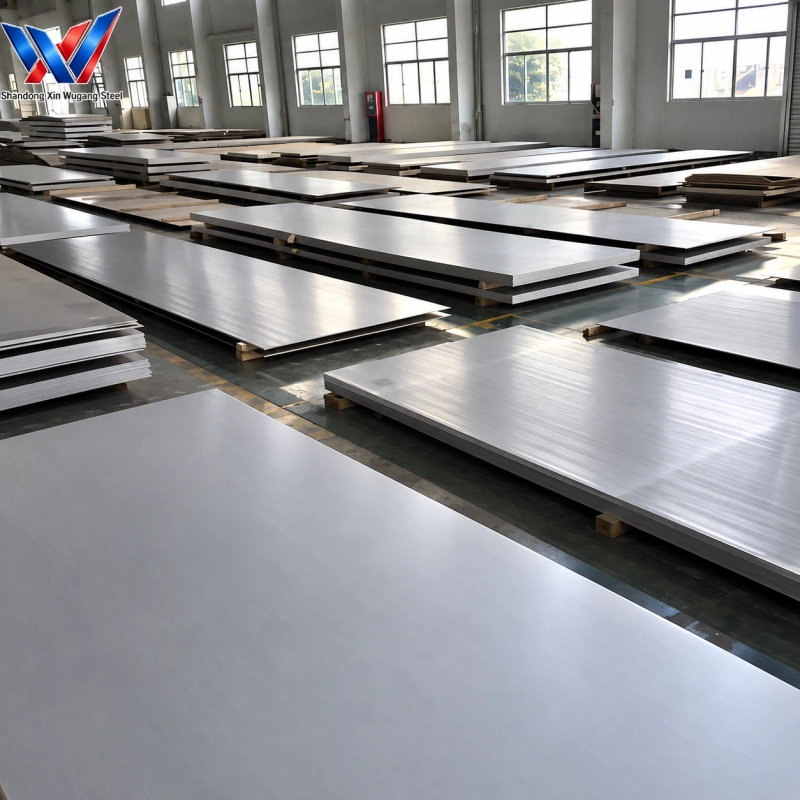
A36 steel is associated with ASTM A36/A36M, a standard covering structural steel products for uses including bolted and welded construction. Buyers should specify the required standard and edition rather than relying on a short commercial description. The material designation alone does not establish whether a particular component meets its design requirements.
A36 carbon steel and 304 stainless steel belong to different material families. The latter is an austenitic chromium-nickel alloy commonly considered where exposure conditions and surface performance matter. However, corrosion resistance depends on the service environment, material condition and design. A familiar name should never replace a review of exposure to chemicals, moisture or salts.
When comparing steel grades, ask your engineer to approve the selection before purchasing. Do not assume that products identified under GB, ASTM, EN or GOST are interchangeable. At Xin Wugang steel, our company information references these standards across our material portfolio. The exact product designation and availability must be confirmed for each enquiry, including requests for stainless steel plate.
| Material enquiry | What to confirm | Purchasing implication |
| A36 | Required standard, edition and product requirements | Match documents to the approved order |
| Type 304 | Exposure conditions, product standard and finish | Confirm suitability before substitution |
| Another alloy | Full designation and acceptance criteria | Avoid ordering by an informal name |
3. How Do Thickness and Application Affect Your Choice?
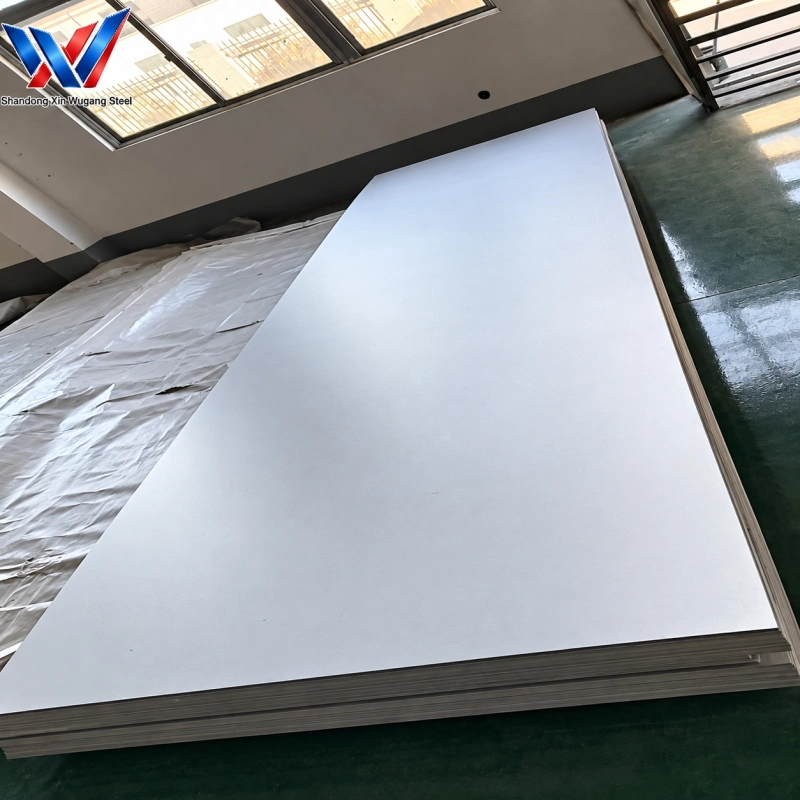
Selecting plate thickness starts with the approved design. More material does not automatically make a component suitable. Its performance also depends on shape, support conditions, connections and the forces it carries. A load-bearing part needs a design check that considers the complete assembly, rather than a purchasing decision based on appearance or past habit.
A thinner section may reduce handling weight but leave less allowance for machining or surface correction. A thicker section may require different handling and processing arrangements. For heavy plate, buyers should discuss both the finished requirement and the work needed to reach it. Keep strength and rigidity separate from assumptions about whether a part will be easy to install.
For structural supports, base plates or heavy machinery foundations, the responsible designer should determine the required load capacity. Purchasing teams then translate those decisions into measurable order requirements. State the nominal measurement and the permitted variation, and identify whether those limits apply before or after processing. This makes inspection more useful and reduces disagreement when goods arrive.
4. How Should You Specify Plate Sizes and Stock Sizes?
Write every dimension in a clear order, with units shown. A useful format is length × width × thickness, followed by the number of pieces and the drawing reference. For rectangular blanks, identify whether these are final measurements or starting measurements for later machining. That distinction can change both material use and processing work.
Do not assume that stock sizes are the same across countries, mills or warehouses. Ask which starting formats are available for your enquiry and whether they can produce the required blanks. A stock item may reduce preparation work, but it still needs to match the material and document requirements. Availability is an order-specific fact, not a promise based on a catalogue label.
For a custom outline, provide a drawing that defines the complete shape. Show hole locations from a stated reference, rather than from an edge that may change during finishing. When ordering a single piece for replacement work, check the existing component carefully. A workshop sketch should distinguish measured features from estimated ones before anyone begins processing.
| Drawing detail | What buyers should provide |
| Units | Clearly identify millimetres or inches |
| Overall measurements | State the required size and measurement order |
| Outline | Show the shape and relevant radii |
| Hole locations | Define the reference edges or centre lines |
| Revision | Identify the approved drawing version |
| Acceptance | State how finished parts will be checked |
5. What Does Hot Rolled Steel Plate Mean for Your Order?
Hot rolled steel plate describes a product form and production route; it does not tell you everything about the material. You still need the grade, required standard and acceptance conditions. Buyers should also discuss surface condition and flatness, especially when the material will contact another component or undergo additional machining.
For general fabrication, a surface condition that is acceptable for one job may create extra preparation work for another. A mounting component, for example, may need a defined contact face. Ask whether that face will remain as supplied or receive later finishing. The answer belongs in the drawing or order notes, where the workshop and inspection team can both see it.
6.How Do Precision, Holes and Edge Details Affect Fabrication?
Precision should describe a measurable requirement, not a general wish for “high quality.” Set a tolerance for each feature that affects fit or function. Overall measurements, hole positions, flatness and edge squareness may need different limits. Requiring tight tolerances everywhere can add work without improving the part, so identify which features actually matter.
For equipment mounting, start with the approved interface drawing. A bracket or pad may look simple, yet its contact face and hole pattern can control whether assembly proceeds smoothly. State whether the workshop must drill holes, form them through another route or leave them for your team. Also define any countersinks, threads or finishing work that the drawing requires.
Consider the next operation. If the team will weld a component, define the required edge preparation and joining procedure separately. A material described as weldable still needs suitable preparation and welding controls. For a part that needs a square edge, agree how that feature will be measured. The aim is a shared inspection plan that links each important feature to a clear acceptance decision.
Before approving a drawing, check:
- Which faces will contact another part.
- Which holes control assembly fit.
- Which edges need finishing.
- Which features can remain as supplied.
- Which measurements require recorded inspection.
7.How Much Does a Plate Weigh, and What Documents Should You Check?
A plate weighs an amount determined by its volume and material density. For an unperforated rectangular blank, estimated mass equals length multiplied by width, depth and density, using consistent units. This calculation helps with early handling and freight planning. It remains an estimate until the actual material and supplied measurements are known.
For example, a hypothetical blank measuring 1.0 m × 0.5 m × 0.01 m has a volume of 0.005 m³. If an assumed planning density is 7,850 kg/m³, its estimated mass is 39.25 kg. This is a worked example, not a company product or shipment record. Holes, removed sections and actual measurements can change the result.
Quality verification requires more than a weight estimate. Ask which material documents are available and whether they can be linked to the supplied goods. A mill certificate, where required and available, should relate to the order’s acceptance criteria. Our company welcomes facility visits and third-party on-site audits; buyers can discuss the review scope before arranging either activity.
How Much Does a Plate Weigh, and What Documents Should You Check?
A plate weighs an amount determined by its volume and material density. For an unperforated rectangular blank, estimated mass equals length multiplied by width, depth and density, using consistent units. This calculation helps with early handling and freight planning. It remains an estimate until the actual material and supplied measurements are known.
For example, a hypothetical blank measuring 1.0 m × 0.5 m × 0.01 m has a volume of 0.005 m³. If an assumed planning density is 7,850 kg/m³, its estimated mass is 39.25 kg. This is a worked example, not a company product or shipment record. Holes, removed sections and actual measurements can change the result.
Quality verification requires more than a weight estimate. Ask which material documents are available and whether they can be linked to the supplied goods. A mill certificate, where required and available, should relate to the order’s acceptance criteria. Our company welcomes facility visits and third-party on-site audits; buyers can discuss the review scope before arranging either activity.
| Verification stage | What to check |
| Before ordering | Approved material designation and drawing |
| Before processing | Relevant documents and identification |
| Before dispatch | Agreed measurements and inspection records |
| At receipt | Condition, identification and document match |
Keep paperwork and physical identification connected throughout the purchasing process. A document is useful only when your team understands which goods it covers.
8. How Can You Request a Useful Steel Plate Quote?
A useful quote starts with an enquiry that another person can interpret without guessing. Include the material designation, approved drawing, required quantity and delivery destination. Identify processing and inspection needs as separate items. If you need steel plate cut to size, define the final blank and ask the team to confirm the available route.
Also distinguish technical requirements from scheduling preferences. State your requested date, then ask for the confirmed arrangement. Do not treat an initial discussion as a delivery commitment. If goods will pass through a depot or consolidation warehouse, explain that route and the receiving requirements. Clear shipment information supports better coordination between procurement, packing, transport and receipt.
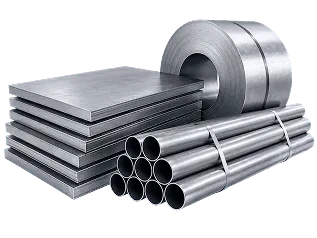
At Shandong Xin Wugang steel, we specialize in coordinating a broad material portfolio for industrial and construction purchasing. Our range includes plates, coils, pipes, reinforcing bars, profiles, wire products, non-ferrous materials and abrasives. Buyers can source several categories through one contact and discuss processing, warehousing and logistics needs together. Specific material availability, methods and order terms still require confirmation.
Our overseas customer focus includes engineering contractors, procurement teams, importers and distributors. For projects involving marine work or shipbuilding, submit the project-approved material requirements rather than assuming a general-purpose product will qualify. We are a material supplier; do not assume we are the original manufacturer of every item offered. Confirm any origin requirement as part of the enquiry.
Enquiry Checklist
| Information | What to send |
| Material | Full designation and required standard |
| Measurements | Approved drawing and units |
| Order amount | Piece count or clearly defined weight |
| Processing | Required outline, holes and finishing |
| Inspection | Acceptance criteria and document needs |
| Destination | Delivery point and receiving arrangements |
| Schedule | Requested timing for discussion |
| Application | Relevant service conditions |
Ready to discuss your requirements? Send the drawing and purchasing schedule to [email protected], or contact us by phone or WhatsApp at +86 19863513853.
Our after-sales service scope includes cargo tracking, order-related problem coordination and remote construction technical support. Define the support needed for your order during the purchasing discussion, so expectations remain clear after shipment.
FAQ
Is A36 suitable for every structural application?
No. Its standard covers a defined range of products and requirements, but suitability depends on the approved design. Connections, service conditions and loading all matter. Ask the responsible engineer to confirm the material before purchasing. Do not substitute it for another specified product without approval.
Can I order a custom blank rather than a full plate?
You can submit the required outline and request confirmation of the available processing arrangement. Include the drawing, units, edge requirements and inspection limits. Xin Wugang steel’s company information includes processing services, but it does not establish every possible method or the capacity for each job.
What is the difference between nominal and measured thickness
The nominal value is the stated purchasing measurement. The actual supplied value may vary within the limits of the applicable standard and order. Define those limits before purchasing, then agree how the receiving team will measure compliance. Do not assume that nominal means exact.
How should I choose between A36 and 304?
Begin with the application, approved design and exposure conditions. These materials serve different needs, so compare the complete requirements rather than price alone. If a change is proposed, have the responsible technical person review it. Specific availability and supporting documents must also be confirmed.