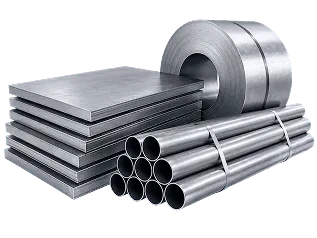
Diamond Plate Steel Sheets: Hot-Rolled Steel Diamond Plate, Sizes, Grades, and Industrial Flooring Applications
Choosing the wrong diamond plate can affect floor safety, load performance, fabrication costs, and project life. Buyers must consider more than the raised pattern: steel grade, thickness, dimensions, surface condition, and installation requirements all matter. Understanding these factors helps you source the right material for industrial projects.
Diamond plate steel sheets are flat steel products with a raised surface pattern designed to improve traction in areas where people or equipment move. Also called checker plate or tread plate, they are commonly used for industrial floors, walkways, ramps, stair treads, platforms, trailers, and truck beds. Buyers can select carbon steel grades such as A36, with specifications, dimensions, and surface treatments matched to the application.
What Is Diamond Plate and How Is It Made?
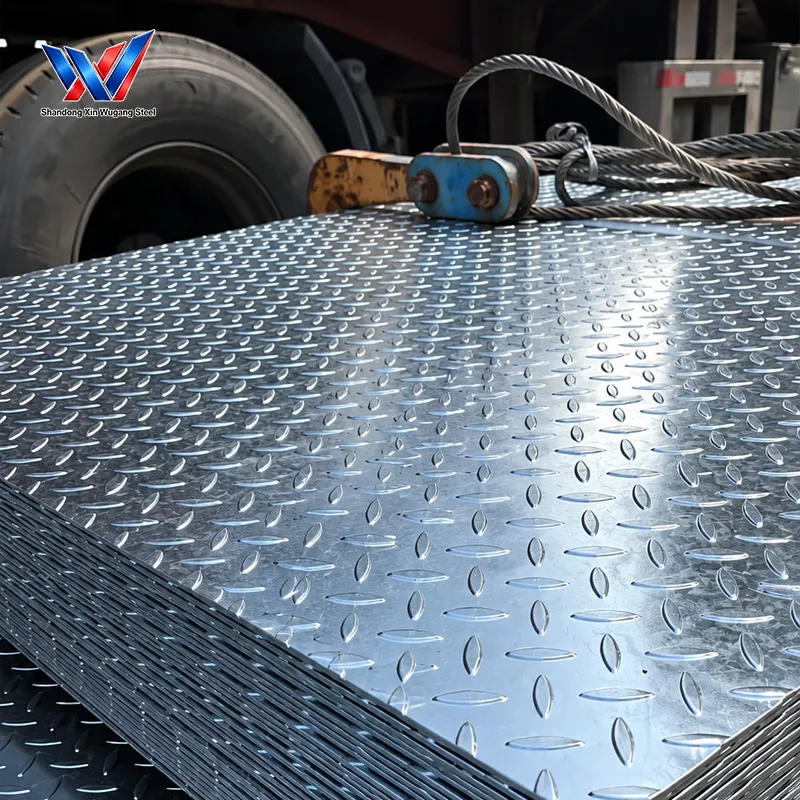
Diamond plate is a type of patterned metal plate with raised shapes on one surface. The pattern is designed to increase surface friction and provide better foot or equipment traction than a smooth metal surface. Depending on the material and manufacturing process, it may also be called tread plate, checker plate, or chequer plate.
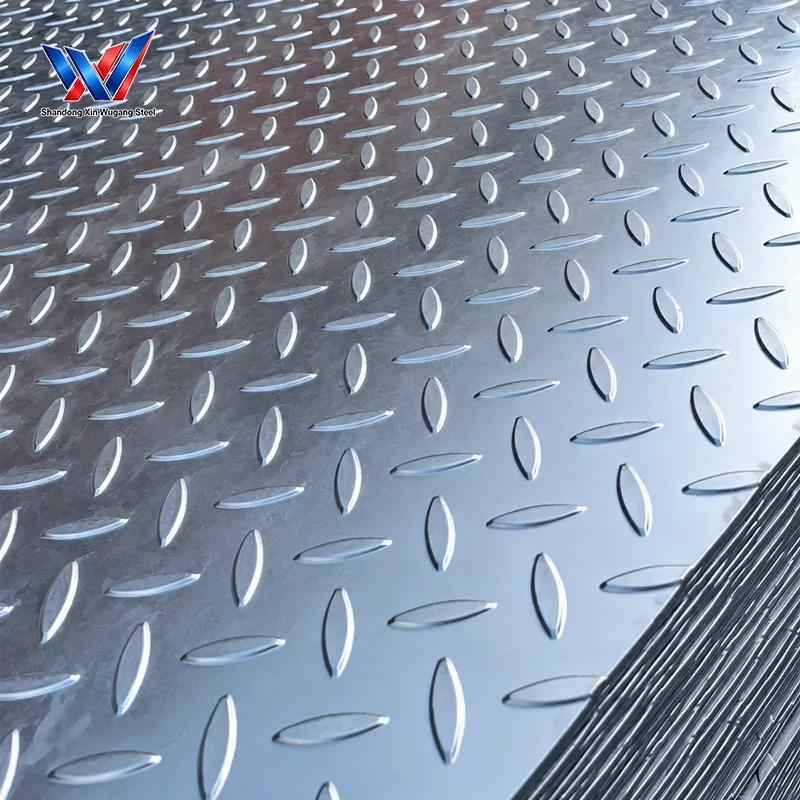
Steel diamond plate is commonly made from carbon steel through a rolling or forming process. During production, the metal passes through patterned rolls or forming equipment that creates raised shapes on the surface. These patterns may include diamonds, teardrops, or other raised designs. The underside is generally flatter, which helps the plate fit against a supporting structure.
The raised diamond pattern gives the product its familiar appearance. More importantly, it creates additional contact edges that can help reduce the risk of slips and falls when the surface is exposed to suitable operating conditions. However, the pattern does not make a floor completely slip-proof. Oil, grease, water, ice, and loose materials can still reduce traction.
How Is Diamond Plate Different from Smooth Steel Plate?
The main difference is the surface design. Smooth steel plate has a relatively flat surface, while patterned plate includes raised sections that provide additional surface texture.
| Feature | Smooth steel plate | Diamond plate |
|---|---|---|
| Surface | Flat and smooth | Raised diamond or patterned surface |
| Main purpose | Structural and general fabrication | Flooring and traction-related applications |
| Foot traction | Depends on surface condition | Improved by raised pattern |
| Cleaning | Generally straightforward | Pattern may collect dirt and residue |
| Common applications | Base plates, structures, equipment | Walkways, ramps, platforms, stair treads |
| Appearance | Plain industrial finish | Distinctive industrial pattern |
For industrial buyers, the choice should depend on the function of the component. If the material is used as a structural base or machine support, a smooth plate may be more suitable. If the exposed surface needs additional grip, patterned plate may be worth considering.
What Are the Main Types of Diamond Plate Steel?
Diamond plate is available in different metal materials, grades, and surface treatments. Selecting the right type requires an understanding of the working environment, expected loads, exposure to moisture, and fabrication method.
The main options include:
- Carbon steel diamond plate: A common choice for industrial platforms, walkways, equipment floors, and general fabrication.
- Galvanized steel diamond plate: Carbon steel with a zinc coating to improve corrosion protection in suitable outdoor and humid environments.
- Stainless steel checkered plate: Used where corrosion resistance, hygiene, or specific chemical exposure requirements are important.
- Aluminum diamond plate: A lighter alternative used in vehicle flooring, equipment covers, and selected transport applications.
For general industrial flooring, carbon steel diamond plate is often considered because of its strength, availability, and fabrication flexibility. A36 is one grade buyers may specify for structural and general-purpose applications, subject to the product standard and project requirements.
Galvanized checker plate may be more suitable when the surface faces regular moisture or outdoor exposure. Stainless steel patterned plate is another option for facilities that require improved corrosion resistance or easier sanitation. The grade and finish must still match the actual environment.
Xin Wugang’s product catalog includes carbon steel checkered diamond tread plate and stainless checkered plate. Its wider steel plate range also covers galvanized and color-coated sheet products. These categories give industrial buyers different material options for different operating conditions.
Why Choose Hot-Rolled Steel Diamond Plate for Industrial Flooring?
Hot-rolled diamond plate is widely considered for industrial flooring because it combines a patterned surface with the practical properties of carbon steel. The raised pattern provides additional texture, while the steel base offers rigidity and strength when correctly specified and supported.
For factories, warehouses, maintenance platforms, and equipment access areas, the material must handle regular foot traffic and, in some cases, moving equipment. Buyers should evaluate the plate’s thickness, grade, support spacing, connection method, and design loads rather than assuming that the surface pattern determines its structural capacity.
Main Advantages of Hot-Rolled Diamond Plate
1. Improved surface traction
The raised pattern creates a textured walking surface. This can help improve grip in suitable conditions compared with smooth metal flooring.
2. Practical fabrication
Carbon steel plate can be cut, drilled, welded, and formed using suitable fabrication procedures. This makes it useful for custom flooring layouts and equipment structures.
3. Industrial durability
When the grade, thickness, support design, and surface protection are properly selected, the material can serve in demanding industrial environments.
4. Flexible installation
Diamond plate can be incorporated into platforms, ramps, access covers, walkways, and other fabricated assemblies. It can be secured using screws or bolts, or connected through approved welding procedures.
5. Multiple surface and size options
Buyers can specify different thicknesses, widths, lengths, and pattern types according to project requirements and supply availability.
One important point: a patterned surface does not replace proper floor design. For high-traffic areas, wet working conditions, or heavy equipment routes, the engineer should check load-bearing capacity, support spacing, drainage, and applicable workplace safety requirements.
What Steel Grades and Standards Are Used for Diamond Plate?
Steel grade and product standard are two important parts of a diamond plate specification. The grade identifies the material’s composition and mechanical requirements, while the standard defines the relevant product and testing requirements.
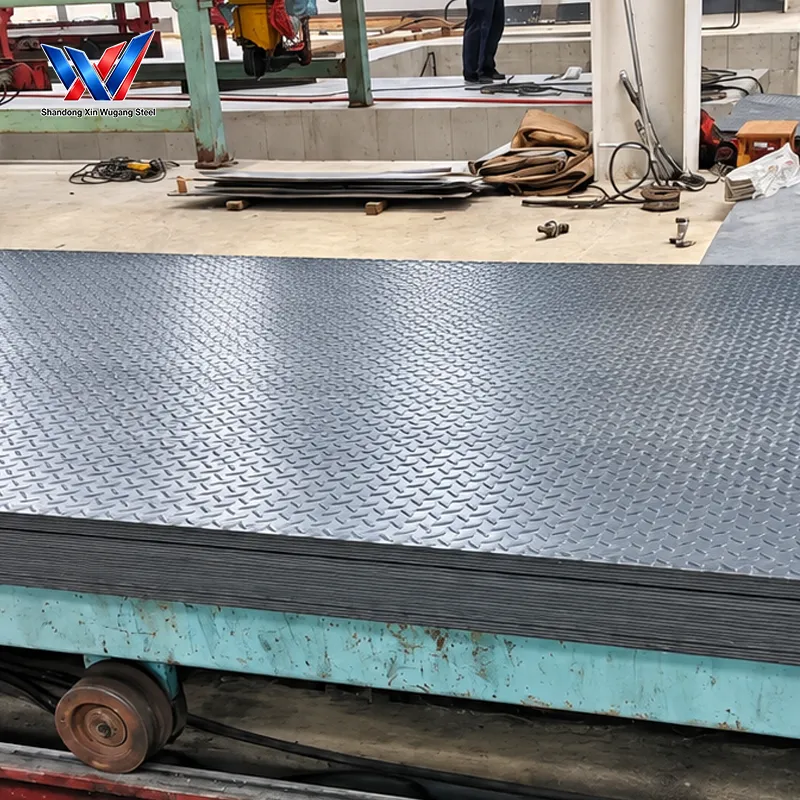
For carbon steel diamond plate, buyers may encounter grades such as A36, Q235B, Q355B, and SS400, depending on the supply market and applicable specification.
Common Grades for Carbon Steel Diamond Plate
| Grade | General characteristics | Potential applications |
|---|---|---|
| ASTM A36 | General structural carbon steel | Industrial flooring, platforms, fabricated components |
| Q235B | Chinese structural carbon steel grade | General fabrication and industrial structures |
| Q355B | Higher-strength Chinese structural steel grade | Selected structural and load-related applications |
| SS400 | Japanese industrial structural steel grade | General structural fabrication |
The actual mechanical properties and suitability must be confirmed against the relevant standard and product certificate. These grades should not be treated as automatically interchangeable.
What Is ASTM A786?
ASTM A786/A786M is a relevant specification for rolled steel floor plates. It addresses steel floor plate products and their material requirements. Buyers considering A786 should confirm the exact product form, grade, dimensions, and edition required by their project.
A36, meanwhile, is a structural steel grade designation under ASTM A36/A36M. It may be specified for suitable checkered plate applications, but the grade and product specification serve different purposes.
For procurement, the purchase order should clearly state both the required material grade and the applicable product standard. This helps avoid confusion when comparing quotations from different suppliers.
Recommended specification details include:
- Product: Carbon steel diamond checkered plate.
- Grade: ASTM A36 or another approved grade.
- Product standard: ASTM A786/A786M or another project-approved specification.
- Surface pattern: Diamond or another specified pattern.
- Thickness: Required nominal dimension.
- Width and length: Standard or custom dimensions.
- Inspection: Agreed testing and material documentation.
For engineering projects, always verify the applicable standard and grade combination with the design team before ordering.
How Do You Choose the Right Diamond Plate Thickness?
Thickness is one of the most important purchasing factors. It affects the plate’s weight, stiffness, fabrication requirements, and ability to meet the project’s design loads.
A thin sheet may be suitable for certain covers or light-duty applications, while a thicker plate may be required for platforms, equipment access areas, or structures exposed to heavier loads. However, thickness alone does not determine load capacity. Support spacing, plate dimensions, material grade, connection details, and load distribution also matter.
Factors to Consider When Selecting Thickness
| Factor | Why it matters |
|---|---|
| Expected load | Determines the required structural performance |
| Support spacing | Influences bending and deflection |
| Plate dimensions | Affects structural behavior and installation |
| Traffic frequency | Helps define the service requirements |
| Equipment movement | May introduce concentrated or dynamic loads |
| Fabrication method | Affects cutting, bending, and welding requirements |
| Environmental conditions | May require additional corrosion protection |
For example, a factory maintenance walkway and a heavy equipment platform may have very different design requirements, even if both use diamond plate.
Buyers should also distinguish between the base metal thickness and the overall patterned thickness where the applicable product specification defines them differently. This detail is important when checking weight, dimensions, and installation clearances.
How to Estimate Diamond Plate Weight
For preliminary purchasing and shipping calculations, buyers can estimate the theoretical weight of a carbon steel plate using:
W = L×B×T ×7.85
Where:
- W = Estimated weight (kg)
- L = Length (m)
- B = Width (m)
- T = Base thickness (mm)
- 7.85 = Approximate carbon steel density (kg/dm³) when used in this unit arrangement.
For patterned products, the raised pattern can affect the actual mass. Use the supplier’s confirmed theoretical weight method or product data for accurate quotation and freight planning.
What Are the Common Diamond Plate Sizes and Dimensions?
Diamond plate sheets are available in different dimensions depending on the mill, grade, thickness, and supply arrangement. Buyers often request standard sheet dimensions for regular projects, while larger industrial orders may require customized cutting.
Common international flat-sheet formats include 4×8 ft, which is approximately 1,219 × 2,438 mm. Other dimensions may be available depending on the product and market. A 4×8 sheet is not automatically available in every grade or thickness, so stock and production availability should be confirmed.
For large industrial projects, buyers may also specify longer lengths or wider plates to reduce the number of joints during installation.
Information to Confirm When Ordering
| Specification | Example |
|---|---|
| Product | Diamond checkered steel plate |
| Material | Carbon steel |
| Grade | A36 |
| Standard | ASTM, subject to project requirements |
| Thickness | As specified in the project drawing |
| Width | Standard or custom |
| Length | Standard or custom |
| Pattern | Raised diamond |
| Quantity | Pieces or metric tons |
A product described as 4×8 diamond plate steel should include the exact measurement system and dimensions. The same applies to requests using terms such as x 48 or x 120: buyers should clarify whether these refer to width, length, or another dimension.
Why Custom Dimensions Matter
Custom sizes can reduce cutting waste, simplify installation, and improve material utilization. For example, a contractor preparing a series of access platforms may prefer plates cut to match the approved drawings rather than purchasing oversized sheets and processing every piece locally.
Xin Wugang supports customized metal sourcing and agreed processing arrangements. Available dimensions, cutting tolerances, and processing methods should be confirmed for each grade and order.
Where Are Diamond Plate Sheets Used in Industrial Projects?
Diamond plate is used in many industries where a patterned metal surface can improve traction and provide a practical flooring solution. Its applications range from factory access platforms to transportation equipment and infrastructure projects.
Industrial Flooring and Walkways
Industrial flooring is one of the most common applications. Diamond plate can be used on maintenance walkways, access platforms, elevated working areas, and selected floor sections.
For these applications, the engineer should check the plate thickness, support spacing, expected loads, and connection design.
Stair Treads and Ramps
Patterned steel plate is frequently considered for stair treads and ramps. The raised texture can improve grip under suitable conditions, especially when compared with an untreated smooth metal surface.
However, drainage, contamination, footwear, and cleaning practices still affect actual slip performance.
Trailers and Truck Beds
Steel checker plate can be used for trailer floors, truck bed surfaces, and selected transport equipment components. Buyers should consider vehicle weight, payload requirements, mounting arrangements, and exposure to road moisture.
Industrial Platforms and Catwalks
Catwalks, mezzanine access areas, and equipment service platforms may use diamond plate as a walking surface. The supporting frame must be designed to handle the required loads.
Machinery and Equipment
Manufacturers may use patterned plates for equipment access covers, maintenance steps, machine platforms, and other fabricated components.
Typical Industrial Applications
| Industry | Application | Main purchasing considerations |
|---|---|---|
| Construction | Access platforms and stair treads | Grade, thickness, dimensions |
| Manufacturing | Factory floors and machine access | Load requirements and fabrication |
| Warehousing | Maintenance walkways and ramps | Traffic and surface conditions |
| Transportation | Trailer and truck bed flooring | Weight and structural design |
| Energy | Equipment platforms and access areas | Environmental conditions and specifications |
| Mining | Industrial access and maintenance platforms | Abrasion, loading, and service conditions |
The correct product depends on the actual application. For projects with heavy loads or harsh environments, buyers should provide the engineering requirements before requesting a quotation.
Diamond Plate Steel vs. Aluminum Diamond Plate: Which Is Better?
Steel and aluminum diamond plate are both used for patterned flooring and equipment surfaces. However, they differ in weight, strength, corrosion behavior, fabrication, and cost.
Steel diamond plate is often selected when strength, rigidity, and heavy-duty structural use are important. Aluminum diamond plate is lighter and may be useful where reducing equipment or vehicle weight is a priority.
| Comparison | Steel diamond plate | Aluminum diamond plate |
|---|---|---|
| Weight | Generally heavier | Generally lighter |
| Strength and stiffness | Suitable for many structural and industrial applications | Depends on alloy and thickness |
| Corrosion behavior | May need coating or protection | Generally forms a protective oxide layer |
| Fabrication | Commonly cut, drilled, and welded using suitable procedures | Can be cut and fabricated with suitable methods |
| Common uses | Industrial flooring, platforms, heavy equipment | Vehicle flooring, covers, lightweight equipment |
| Cost considerations | Depends on grade, thickness, coating, and market | Depends on alloy, thickness, and market |
A 4×8 diamond plate aluminum sheet may be suitable for a lightweight truck accessory or equipment cover. For a factory platform designed for higher loads, carbon steel may be a more suitable material, subject to structural calculations.
Buyers should also consider the possibility of galvanic corrosion when dissimilar metals contact each other in the presence of an electrolyte. Suitable isolation and connection details may be necessary.
Xin Wugang supplies steel and aluminum products as part of its wider metal material range. However, the exact aluminum tread plate alloy, pattern, and dimensions should be confirmed separately before quotation.
How Does Diamond Plate Fabrication and Installation Work?
Diamond plate can be processed into different industrial components through cutting, drilling, welding, and other fabrication methods. The selected process depends on the material grade, thickness, design, and finished component.
Common Fabrication Methods
Cutting
Plates may be cut to specified lengths and widths using suitable cutting equipment. Buyers should confirm edge quality and dimensional tolerances.
Drilling and punching
Holes may be required for installation, fasteners, or connections. Their positions should follow the approved drawing.
Welding
Carbon steel patterned plate can be incorporated into welded structures when the material grade, joint design, and welding procedure are appropriate.
Bending and forming
Some products may be bent or formed for ramps, covers, steps, and other fabricated components. The pattern and base thickness may affect the process, so forming requirements should be reviewed in advance.
Surface protection
For carbon steel products used outdoors or in humid environments, an appropriate coating or other protection may be needed. Galvanized options may also be considered where suitable.
Installation Considerations
When installing diamond plate as a floor or platform surface, buyers and contractors should consider:
- Support structure: Confirm that beams, frames, and supports meet the design requirements.
- Fastening: Select suitable screws or bolts, or an approved welding method.
- Joint layout: Plan plate connections to avoid unnecessary gaps and weak points.
- Drainage: Prevent water and process liquids from accumulating.
- Edge finishing: Remove sharp edges and ensure safe transitions.
- Maintenance: Inspect the surface, fasteners, coatings, and support structures regularly.
A raised pattern can help improve surface traction, but installation quality is equally important. A poorly supported or incorrectly secured plate can still create safety problems.
What Should Buyers Check When Sourcing Diamond Plate Steel?
For overseas importers, steel distributors, construction contractors, and industrial procurement teams, selecting a supplier requires more than comparing unit prices. Buyers need clear material specifications, reliable sourcing, suitable processing, quality documents, and coordinated shipment arrangements.
Before placing an order, check the following:
| Purchasing factor | What to confirm |
|---|---|
| Product type | Carbon steel, galvanized, or stainless checkered plate |
| Grade | A36, Q235B, Q355B, or another approved grade |
| Standard | ASTM, EN, GB, or project-specific requirements |
| Thickness | Nominal base thickness and applicable tolerance |
| Dimensions | Width, length, and quantity |
| Pattern | Diamond, five-bar, or other specified design |
| Surface protection | Coating or treatment requirements |
| Inspection | Material test reports and agreed inspection |
| Processing | Cutting, drilling, or other agreed services |
| Shipment | Packaging, loading, destination port, and documents |
Why One-Stop Metal Sourcing Can Help
Industrial projects often require more than one steel product. A single project may need diamond plate, structural steel sections, steel pipes, steel coils, reinforcement bars, and other metal materials.
Managing multiple suppliers can increase communication time and make it harder to coordinate specifications and shipment schedules. Working with a supplier that can coordinate several material categories may simplify the purchasing process.
At Shandong Xin Wugang Steel Co., Ltd., we provide integrated sourcing and supply solutions for overseas B2B customers. Our product range covers:
- Steel plates and sheets, including carbon steel and checkered plate.
- Steel coils and strips.
- Steel pipes and tubes.
- Steel bars and rods.
- Structural sections and profiles.
- Wire and mesh.
- Abrasives and grinding media.
- Copper, aluminum, and lead products.
We work with established Chinese steel mill supply partners and coordinate material sourcing, customized dimensions, agreed processing, quality inspection, export documentation, and international logistics according to order requirements.
For project buyers, this approach can help bring different material categories into one coordinated procurement process.
How to Request a Diamond Plate Quotation
To receive a more accurate quotation, prepare the following information:
- Required grade and standard.
- Plate thickness and dimensions.
- Pattern type.
- Quantity in pieces or metric tons.
- Surface coating or protection requirements.
- Cutting or other processing requirements.
- Inspection and documentation needs.
- Destination country and port.
If you have drawings, a bill of materials, or a project specification, include them with your inquiry. This helps us review the material requirements and identify suitable sourcing options.
Looking for carbon steel diamond plate or other industrial steel products?
Contact Shandong Xin Wugang Steel Co., Ltd. to discuss your specifications, bulk purchasing needs, and project supply requirements.
- Email: Sara@x-wusteel.com
- Phone / WhatsApp: +86 19863513853
- Website: https://x-wusteel.com/
FAQ
What is the difference between diamond plate and checker plate?
They are commonly used as alternative names for patterned metal plate. Both describe products with raised surface patterns designed to improve traction. The exact pattern and manufacturing specification should be confirmed with the supplier.
Is A36 steel suitable for diamond plate?
A36 is a commonly used structural carbon steel grade and can be specified for suitable checkered plate applications. Buyers should confirm the applicable product standard, mechanical properties, and project requirements before ordering.
Is diamond plate suitable for industrial flooring?
Yes. Diamond plate is commonly used for industrial floors, platforms, ramps, stair treads, and walkways. Its raised surface pattern can improve traction, but the plate thickness, support design, installation, and operating conditions must also meet the project's requirements.
What is the difference between steel and aluminum diamond plate?
Steel diamond plate is generally heavier and often selected for industrial applications where strength and rigidity are important. Aluminum diamond plate is lighter and may suit transport equipment, covers, and other weight-sensitive applications.
Can diamond plate be cut to custom sizes?
Yes, cutting may be arranged according to the product grade, thickness, dimensions, quantity, and processing availability. Buyers should provide drawings or cutting lists and confirm tolerances before ordering.
What information is needed to order diamond plate sheets?
Provide the material grade, standard, thickness, width, length, pattern type, quantity, surface treatment, inspection requirements, and destination port. These details help the supplier prepare an accurate quotation.