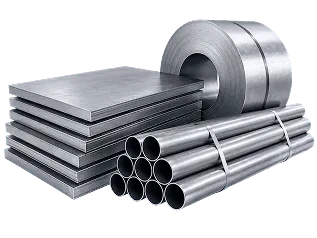
How to Source Carbon Steel Plate for Large Industrial Projects: A Complete Procurement Guide
Sourcing carbon steel plate for a large industrial project is not just about finding a competitive price. Unclear specifications, inconsistent material quality, fragmented suppliers, and delayed shipments can disrupt the entire project schedule. A structured sourcing process helps buyers control these risks and secure reliable steel supply.
To source carbon steel plate for large industrial projects, buyers should first prepare a detailed material list covering grades, standards, dimensions, quantities, and delivery schedules. They should then evaluate suppliers, confirm mill sources, compare technical and commercial quotations, arrange material inspections, and coordinate processing, export documentation, and shipping. Working with an experienced steel supply partner can simplify multi-category purchasing and improve procurement coordination.
Why Is Carbon Steel Plate Sourcing Important for Large Industrial Projects?
Large industrial projects often require substantial quantities of steel materials in different grades, thicknesses, and dimensions. Construction contractors may need structural plates, equipment manufacturers may require machine base plates, and energy projects may involve pressure vessel materials and supporting steel components.
The challenge is not simply finding a carbon steel plate supplier. Buyers must make sure that all materials meet the engineering specifications, arrive within the required schedule, and have the correct inspection documents. A mismatch in one material grade or dimension can affect fabrication, assembly, and project progress.
For international procurement teams, the challenge becomes more complex when materials come from several manufacturers. Different suppliers may use different documentation formats, production schedules, packaging methods, and inspection arrangements.
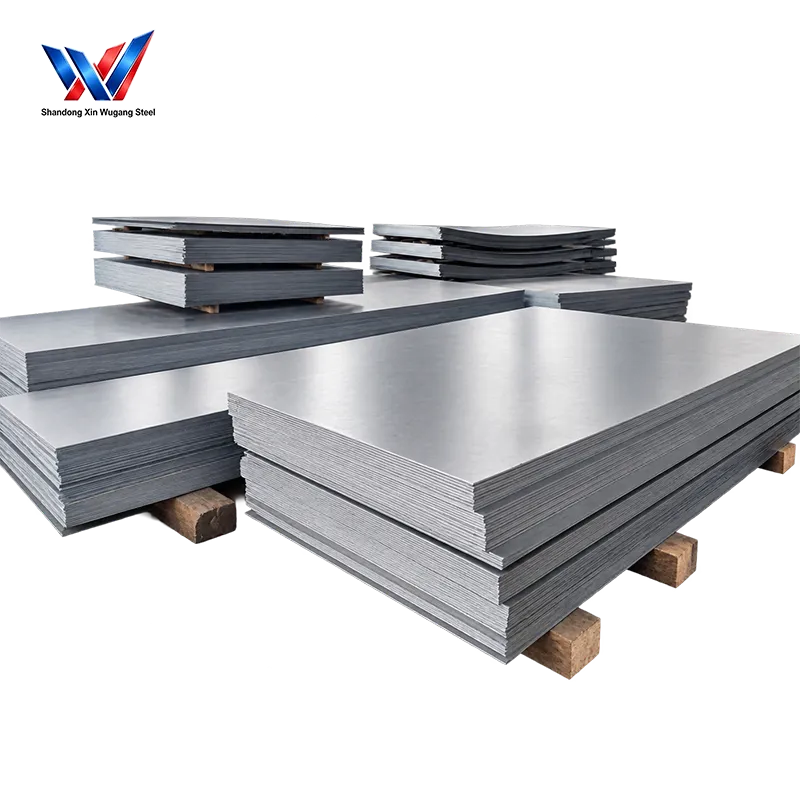
Common Procurement Challenges
| Procurement Challenge | Potential Project Impact | Recommended Approach |
|---|---|---|
| Incorrect material grade | Design or fabrication problems | Confirm approved material specifications |
| Inconsistent dimensions | Cutting waste and assembly delays | Provide clear dimensional requirements |
| Multiple suppliers | Complex communication | Coordinate sourcing through one procurement channel |
| Unclear quality documents | Inspection and acceptance delays | Agree on MTC and inspection requirements |
| Delayed production | Project schedule disruption | Confirm production and delivery milestones |
| Poor shipment planning | Additional logistics costs | Plan packaging and loading in advance |
A well-managed sourcing process connects technical requirements with purchasing, inspection, and logistics. It helps buyers avoid treating every steel order as a separate transaction.
For a large industrial project, the goal should be to establish a supply plan that supports the full project schedule rather than focusing only on the first purchase order.
How Should Buyers Prepare a Carbon Steel Plate Procurement List?
A detailed procurement list is the starting point for successful steel sourcing. Before contacting a supplier, buyers should collect the material information from engineering drawings, bills of materials (BOMs), technical specifications, and construction schedules.
A vague inquiry such as “Please quote carbon steel plates” does not provide enough information for an accurate quotation. Different grades, dimensions, standards, and quantities can result in very different prices and supply arrangements.
What Information Should a Steel Plate RFQ Include?
A professional request for quotation should contain the following information:
| Required Information | Example or Description |
|---|---|
| Product | Carbon steel plate |
| Material grade | ASTM A36, A572 Gr.50, or project-approved grade |
| Standard | ASTM, EN, GB, or GOST |
| Thickness | Required nominal thickness in mm |
| Width | Required plate width |
| Length | Standard or fixed length |
| Quantity | Pieces or metric tons |
| Surface condition | Hot-rolled black, pickled, or other specified finish |
| Processing | Cutting, drilling, or profiling |
| Inspection | MTC, third-party inspection, or other requirements |
| Destination | Country and discharge port |
| Delivery schedule | Required shipment or arrival date | |
Organize the Material List by Product Category
Large projects often require more than one type of steel. Organizing the procurement list into categories makes supplier communication easier.
For example:
- Carbon steel plate: Structural plates, equipment base plates, and fabricated components.
- Alloy steel plate: Materials for specific strength, temperature, or service requirements.
- Steel sections: H beams, channels, angles, and other structural profiles.
- Steel pipes: Seamless and welded pipes for industrial systems.
- Steel bars and rods: Bars for machining, fabrication, and structural applications.
- Coils and sheets: Materials for panels, enclosures, and industrial manufacturing.
Xin Wugang supplies these categories as part of its broader steel and metal product range. Buyers can review the Steel Plate and Sheet Catalog and submit a consolidated material list for sourcing review.
Why Are Drawings and BOMs Important?
Drawings provide the technical details needed to understand how materials will be used. A BOM helps the procurement team check quantities, dimensions, and product categories.
When buyers submit these documents together, the supplier can review the complete requirement rather than quote isolated items without understanding the project context.
For complicated orders, it is also helpful to separate materials into procurement batches based on fabrication priority and required delivery dates.
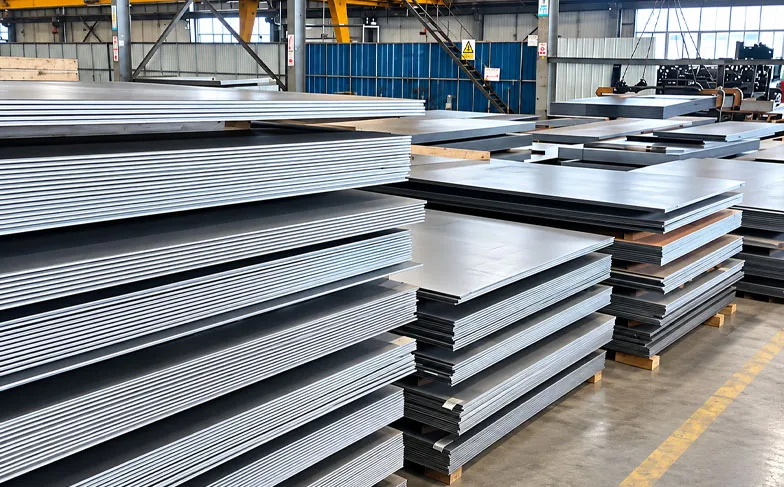
How Do You Match Steel Grades and Standards to Project Requirements?
Selecting the correct material grade is one of the most important steps in industrial steel procurement. Different grades have different chemical compositions, mechanical properties, and intended applications.
A carbon steel plate suitable for a general structural frame may not be appropriate for a pressure vessel, shipbuilding structure, or high-wear component.
Buyers should therefore follow the engineering specification and applicable design code rather than choosing materials based only on availability or price.
Common Carbon Steel Plate Grades
| Grade | Standard or Specification | Typical Application |
|---|---|---|
| Q235B | GB/T | General structural fabrication |
| Q355B | GB/T | Higher-strength structural applications |
| A36 | ASTM A36/A36M | General structural steelwork |
| A572 Gr.50 | ASTM A572/A572M | High-strength structural applications |
| A516 Gr.70 | ASTM A516/A516M | Pressure vessel applications |
| S235JR | EN 10025 | General structural applications |
| S355JR | EN 10025 | Higher-strength structural applications |
These grades should not be treated as automatic equivalents. Chemical composition, thickness-dependent properties, impact requirements, and the applicable product standard must all be reviewed before substitution.
Match Material Requirements to the Project Industry
Different industries have different steel requirements.
| Industry | Material Requirements | Relevant Steel Products |
|---|---|---|
| Construction | Structural strength and fabrication performance | Carbon steel plates and sections |
| Oil and Gas | Pressure, temperature, and service requirements | Pressure vessel plates and pipes |
| Shipbuilding | Marine-grade material and classification requirements | Shipbuilding steel plates |
| Energy | Structural and high-temperature requirements | Structural and boiler plates |
| Mining | Abrasion and impact resistance | Wear-resistant steel plates |
| Machinery | Machinability and structural performance | Carbon and alloy steel plates |
For example, ASTM A36 may be appropriate for general structural components, while ASTM A516 Gr.70 is designed for pressure vessel applications under its applicable requirements.
Xin Wugang’s carbon steel range includes structural and high-strength plates, shipbuilding and marine plates, abrasion-resistant plates, boiler and pressure vessel plates, weathering steel, and checkered plates.
The buyer should provide the project specification, operating conditions, and applicable standard so the supplier can identify suitable sourcing options.
How Can You Evaluate a Carbon Steel Plate Supplier?
Choosing a steel supplier is a long-term procurement decision, particularly for large projects involving repeated orders or several material categories.
A low quotation does not necessarily indicate the best supply solution. Buyers should review the supplier’s product range, mill resources, quality documentation, processing services, and export coordination capabilities.
Check Steel Mill Supply Resources
Ask where the material comes from and whether the supplier can provide original mill documentation.
Xin Wugang’s steel plate and sheet supply page identifies Baowu Steel Group, Baosteel, Shougang Group, and Baotou Steel among its direct mill sourcing partners.
Review Product Coverage
Large industrial projects may require several steel grades and product categories. A supplier with broader sourcing capabilities can help coordinate these requirements under one purchasing plan.
Check Quality and Certification Documents
Confirm whether the supplier can provide:
- Mill Test Certificates (MTCs).
- Chemical composition records.
- Mechanical property test results.
- Heat number and batch identification.
- Certificates of origin where required.
- Third-party inspection arrangements.
Evaluate Processing Capabilities
Some projects need plates supplied in standard mill dimensions. Others require cutting, profiling, or surface treatment before delivery.
A supplier that can coordinate processing may reduce the need for additional local handling.
Review Export Experience
International steel shipments require proper packaging, marking, loading arrangements, and export documents. Buyers should confirm these details before finalizing the order.
Supplier Evaluation Checklist
| Evaluation Factor | Questions to Ask |
|---|---|
| Mill resources | Can the supplier identify the material source? |
| Product coverage | Can it coordinate multiple steel categories? |
| Standards | Can it meet the required international standards? |
| Quality | Are MTCs and inspection records available? |
| Processing | Can it arrange cutting and customization? |
| Logistics | Can it coordinate export packaging and shipment? |
| Communication | Can it manage technical and commercial updates? |
A reliable carbon steel plate supplier should be able to explain not only what it can supply, but also how the material will be sourced, checked, processed, and delivered.
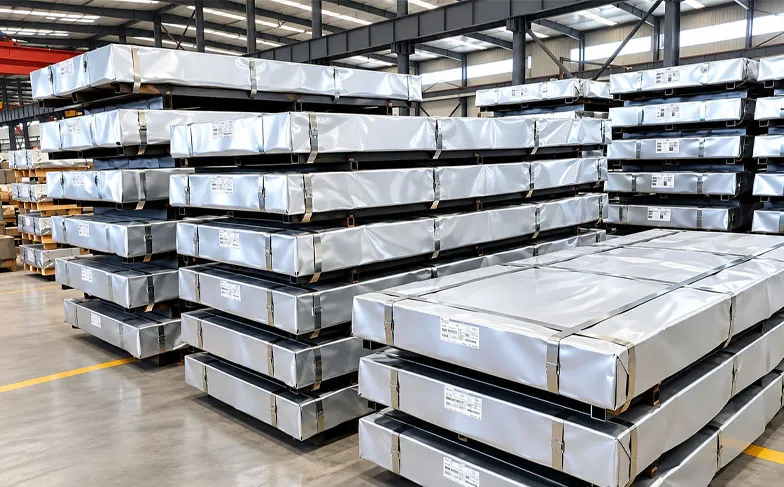
How Do You Compare Steel Plate Quotations and Total Procurement Costs?
Comparing steel quotations requires more than checking the price per metric ton. Different quotations may include different product standards, dimensions, processing services, inspection costs, and delivery conditions.
A lower material price may become more expensive after additional cutting, handling, transportation, or inspection costs are added.
Understand the Main Cost Components
| Cost Component | What Buyers Should Review |
|---|---|
| Base material price | Grade, thickness, and market price |
| Processing cost | Cutting, profiling, or other services |
| Inspection cost | Testing and third-party inspection |
| Packaging cost | Export packing and protection |
| Inland transportation | Delivery from mill or processing facility |
| Ocean freight | Shipping route and container or bulk arrangement |
| Insurance | Coverage according to the agreed terms |
| Import costs | Duties, taxes, and destination charges |
Compare Quotations on the Same Basis
Before comparing suppliers, make sure all quotations use the same technical and commercial conditions.
Check:
- Identical material grade and standard.
- Same nominal thickness and dimensions.
- Same quantity and order scope.
- Same surface condition.
- Same inspection requirements.
- Same delivery destination.
- Comparable Incoterms.
For example, an FOB quotation and a CIF quotation cannot be compared directly without accounting for the different transportation and insurance responsibilities.
Consider Total Procurement Value
The total cost of steel sourcing also includes the time and resources needed to coordinate multiple suppliers.
If a project requires carbon steel plate, steel sections, pipes, and coils, separate purchasing may increase communication, inspection, and logistics work.
A coordinated supply arrangement may simplify procurement and reduce unnecessary handling. The actual savings depend on order volume, material availability, processing requirements, and shipping arrangements.
What Should Buyers Know About Stock, Production, and Custom Processing?
Large projects often have strict construction and fabrication schedules. Material availability and processing lead times can therefore affect the entire purchasing plan.
Buyers should distinguish between available stock, materials that require mill production, and products that need additional processing.
Stock Materials vs. Mill Production
| Supply Arrangement | Characteristics | Suitable Situations |
|---|---|---|
| Available stock | Existing material subject to confirmation | Urgent or standard-size orders |
| Mill production | Produced according to agreed specifications | Large quantities or special requirements |
| Customized processing | Cutting or other agreed operations | Drawing-based project requirements |
The website’s steel plate catalog indicates that regular carbon steel plate MOQ starts at 5 metric tons, while special materials and other categories may have different minimum quantities. Small trial orders may be discussed subject to stock availability.
Custom Cutting and Processing
Large projects may require steel plates in fixed dimensions to match fabrication drawings.
Xin Wugang lists the following processing options:
- Shearing.
- Plasma cutting.
- Laser cutting.
- Customized dimensions.
- Surface treatment according to agreed requirements.
Processing requirements should be confirmed before quotation. The supplier needs to know the material grade, thickness, cutting dimensions, tolerances, and quantity.
Build a Procurement Schedule
- A practical procurement schedule should include:
- Technical specification confirmation.
- Supplier quotation and order approval.
- Material sourcing or mill production.
- Inspection and quality acceptance.
- Cutting and other processing.
- Packaging and export preparation.
- Shipment and delivery coordination.
For large orders, divide the material list into batches according to fabrication priorities. This can help prevent all materials from arriving too early or too late.
How Can You Ensure Steel Quality Through Inspection and Documentation?
Quality inspection is a key part of large-scale steel procurement. Even when a supplier has reliable mill resources, buyers should define acceptance requirements before production or shipment.
The inspection plan should match the project specification and the material’s intended application.
Review the Mill Test Certificate
A Mill Test Certificate provides information about the supplied material batch. Depending on the product and standard, it may include:
- Material grade and applicable standard.
- Heat number.
- Chemical composition.
- Yield strength.
- Tensile strength.
- Elongation.
- Impact test results, where applicable.
- Relevant inspection results.
For traceability, buyers should confirm that the MTC corresponds to the actual material being supplied.
Arrange Third-Party Inspection When Required
For projects with strict quality requirements, buyers may arrange third-party inspection before shipment.
Xin Wugang’s steel plate supply information identifies SGS and BV as inspection options that can be coordinated according to buyer requirements.
The inspection plan should clearly define:
| Inspection Item | Purpose |
|---|---|
| Visual inspection | Check surface condition |
| Dimensional inspection | Verify thickness, width, and length |
| Chemical analysis | Confirm material composition |
| Tensile testing | Check mechanical properties |
| Impact testing | Verify specified toughness requirements |
| Hardness testing | Check specified hardness where applicable |
| Document review | Verify certificates and traceability |
Not every test is required for every plate. The applicable product standard and project specification should determine the inspection scope.
Control Material Identification
When an order includes multiple grades or dimensions, clear identification is essential.
Each batch or bundle should be marked according to the agreed identification system. Material grade, dimensions, heat number, and other required details should correspond to the supporting documents.
This is particularly important when several steel categories are shipped together.
How Should You Plan Packaging, Shipping, and Delivery Schedules?
Steel plate is heavy and requires suitable packaging, handling, and loading arrangements. Poor shipment planning can lead to additional costs, handling damage, and delivery delays.
For international projects, logistics planning should begin before the material is ready for shipment.
Choose the Appropriate Shipping Arrangement
The shipment method depends on:
- Total order weight.
- Plate dimensions.
- Available container dimensions and payload limits.
- Destination port.
- Handling equipment.
- Shipping schedule.
- Cost and cargo requirements.
Standard-sized materials may be suitable for container shipment, subject to weight and loading limits. Oversized or particularly heavy cargo may require special handling or alternative transport arrangements.
Export Packaging and Marking
Before dispatch, buyers should confirm:
- Plate bundling and securing methods.
- Protective materials where required.
- Bundle weight and dimensions.
- Product identification marks.
- Heat number and grade identification.
- Loading and unloading requirements.
Coordinate Documents Before Shipment
Common export and shipping documents may include:
- Commercial invoice.
- Packing list.
- Bill of lading.
- Certificate of origin, where required.
- Mill Test Certificate.
- Inspection certificate, where agreed.
- Other destination-specific documents.
The exact document list depends on the transaction terms, destination country’s regulations, and buyer requirements.
A clear shipment plan helps procurement teams coordinate material arrival with fabrication, installation, and construction schedules.
How Can One-Stop Steel Sourcing Simplify Large Project Procurement?
Large industrial projects rarely require only one steel product. A construction project may need structural plates, H beams, channels, pipes, reinforcement products, and galvanized coils. A machinery project may require carbon steel plates, alloy bars, seamless pipes, and specialty materials.
When every product is purchased from a different supplier, buyers must manage separate quotations, production schedules, inspections, documents, and shipments.
One-stop sourcing can simplify this process by coordinating multiple material categories through a single procurement channel.
A Practical Example: Coordinated Steel Procurement for a Warehouse Project
Consider a warehouse construction project that needs structural steel, carbon steel plates, roofing materials, and supporting components.
The procurement team may need to coordinate:
- Structural H beams and channels.
- Carbon steel plates for structural and fabricated components.
- Galvanized steel coils for wall and roofing systems.
- Steel pipes for supporting systems.
- Diamond checkered plates for selected access areas.
Instead of managing separate suppliers for every category, the buyer can submit one consolidated procurement list and coordinate the material requirements, inspection arrangements, and shipment plan.
This approach is particularly useful for EPC contractors, construction companies, steel trading firms, and industrial project procurement teams.
Why Choose Shandong Xin Wugang Steel for Industrial Steel Supply?
Shandong Xin Wugang Steel Co., Ltd. is a comprehensive supplier of steel and non-ferrous metal products based in Shandong, China. We serve international B2B markets with a focus on integrated metal sourcing, customized processing, quality inspection, and export supply coordination.
Our business is designed to support buyers who need more than a single steel product. We help coordinate different material categories according to project specifications and purchasing requirements.
Our Core Supply Advantages
1. Established Steel Mill Partnerships
Our steel plate and sheet sourcing network includes Baowu Steel Group, Baosteel, Shougang Group, and Baotou Steel. We coordinate supply according to the required grades, standards, and dimensions.
2. Broad Product Coverage
Our product categories include:
- Steel plates and sheets.
- Steel coils and strips.
- Steel pipes and tubes.
- Steel bars and rods.
- Structural sections and profiles.
- Wire and mesh.
- Abrasives and grinding media.
- Copper, aluminum, and lead.
3. Customized Processing
We coordinate cutting, slitting, surface treatment, and other agreed processing services to support project-specific material requirements.
4. Quality Inspection and Documentation
Mill Test Certificates and certificates of origin are provided according to the order requirements. Third-party inspection can be arranged when required.
5. International Trade and Logistics Support
We coordinate export packaging, documentation, shipment arrangements, and delivery communication for overseas buyers.
Start Your Industrial Steel Procurement Inquiry
Whether you are planning a construction project, sourcing materials for machinery manufacturing, or purchasing steel for distribution, our team can review your requirements and coordinate suitable supply options.
To help us prepare a quotation, please provide:
- Project name and application.
- Material list or bill of materials.
- Required grades and standards.
- Dimensions and quantities.
- Processing and inspection requirements.
- Destination country and port.
- Expected delivery schedule.
Send your drawings, BOM, or steel procurement list to Shandong Xin Wugang Steel Co., Ltd.
We will review the requirements and coordinate the next steps for your industrial material sourcing.
- Email: Sara@x-wusteel.com
- Phone / WhatsApp: +86 19863513853
- Website: https://x-wusteel.com/
FAQ
How do I source carbon steel plate for a large industrial project?
Start with an approved material list containing grades, standards, dimensions, quantities, and delivery requirements. Evaluate suppliers based on mill resources, quality documentation, processing capabilities, inspection support, and export experience. Then confirm the quotation, production schedule, inspection plan, and shipping arrangements.
What information should I provide when requesting a carbon steel plate quotation?
Provide the material grade, standard, thickness, width, length, quantity, surface condition, processing requirements, inspection requirements, and destination port. Drawings and BOM files are also useful for complex orders.
Can one supplier provide carbon steel plates and other steel products?
Yes. A comprehensive steel supplier may coordinate carbon steel plates, steel coils, pipes, bars, structural sections, wire products, and other metal materials. The available specifications, minimum quantities, and delivery schedules should be confirmed for each category.
What quality documents should I request when importing steel plates from China?
Common documents include Mill Test Certificates, chemical composition reports, mechanical test results, certificates of origin where required, and agreed third-party inspection reports. The exact documentation should follow the purchase specification and destination requirements.
Can carbon steel plates be cut to custom dimensions before shipment?
Yes. Custom cutting may be arranged according to the material grade, thickness, dimensions, and processing availability. Buyers should provide cutting drawings and confirm dimensional tolerances before production or processing.
How can I reduce delays when purchasing steel for an industrial project?
Prepare complete specifications, confirm supplier capabilities early, divide materials into delivery batches, agree on inspection requirements, and coordinate shipping with the construction schedule. Avoid making major material changes after production has started.